
birth guide
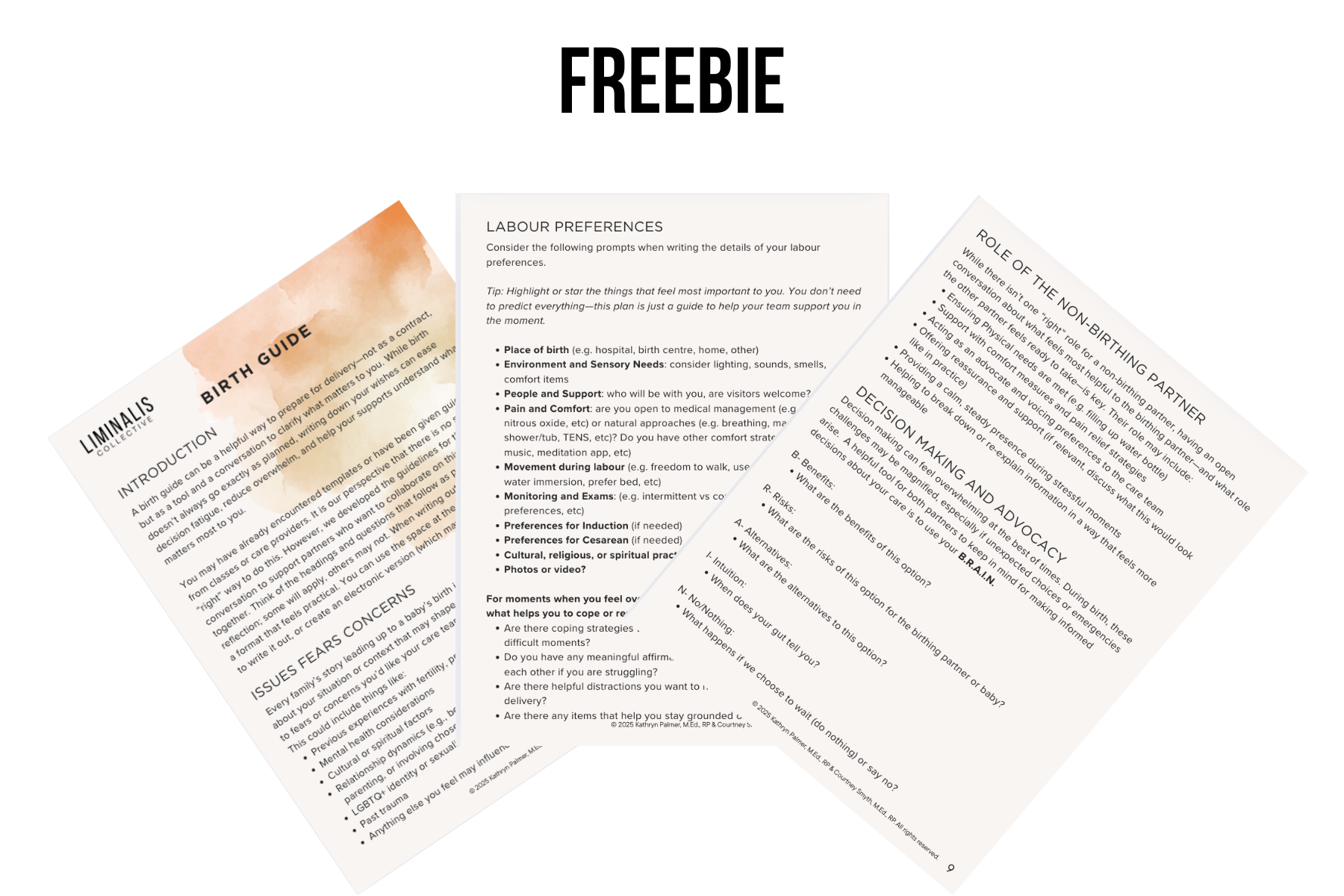
Birth rarely goes exactly as planned—but that doesn’t mean you can’t plan for what matters to you most.
When we first started working with new and expectant parents, one thing became clear: everyone approaches birth planning differently. Some people are told to “make a birth plan” with little guidance. Others take a course or work with a provider who offers a specific template. Some plans are incredibly detailed, while others stay broad and flexible.
You’ll hear us say this often, but it’s worth repeating: there is no single “right” way to prepare for birth. That belief guided us when creating one of our very first resources—the Liminalis Collective Birth Guide.
Why we created this guide
While traditional birth plans can be helpful, they often miss something essential. They tend to focus almost entirely on the birthing parent and baby, without acknowledging the experience of the non-birthing partner—before, during, and after delivery. We believe that’s a missed opportunity for collaboration and connection.
Our Birth Guide was designed to shift that narrative. It’s built for partners who want to prepare together—a tool that invites both voices into the conversation.
A flexible approach
We intentionally call this a guide rather than a plan.
It’s not a contract or a checklist—it’s a reflective exercise. Think of it as a mental health tool: something that reduces decision fatigue, eases the mental load, and helps you communicate what truly matters to you and your support team.
Birth doesn’t always go according to plan, but there’s a lot to gain from going through this process—both individually and as a couple. It’s a chance to clarify values, explore expectations, and talk through practical details before the big day.
How to use it
1. Download the guide (free below!)
2. Start on your own. Take a few minutes to read through the prompts and jot down thoughts or questions.
3. Come together. When you’re ready, sit down with your partner (or whoever your support person is) to compare notes and discuss what feels most important to each of you.
4. Create something you can share with your team. You can use the space at the end to write your version out, or type it into a document that’s easy to edit and send to your care team.
A gentle note
If you start reading and realize you’re feeling overwhelmed—or unsure what you even want—you’re not alone. Many people notice this process brings up bigger emotions or questions about expectations and control. That’s completely normal.
Give yourself time to reflect and talk to your partner. If you’re still feeling stuck, remember: therapy can be a great space to explore these feelings and build confidence leading up to birth if you think you’d benefit from additional support.
Keep the conversation going
Creating a birth guide isn’t a one-time discussion—it’s an ongoing conversation you can revisit as your plans and feelings evolve. If this kind of resource feels helpful, check out our Partners in Mental Health Workshop—a practical, research-informed space designed for couples preparing for birth and postpartum. You’ll learn about the experiences that can impact both birthing and non-birthing partners, and explore strategies to help you feel more connected and supported as you step into this next season together.